/
5 min read
Peace Activists are Disappearing in Pakistan
A personal essay from a 2013 anthropology field visit to Barumal, Gujarat - on religious specialists, Dalit neighbourhoods, and unspoken divisions hiding in plain sight.
Share this article
Author’s Note: This story was originally written in January 2018.
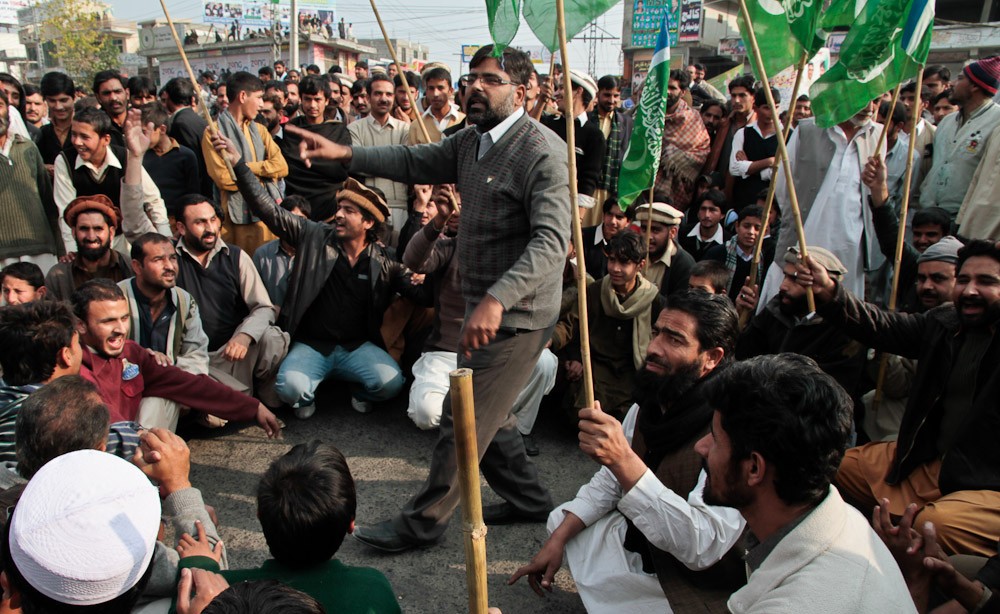
Pakistan’s civil society has been up in arms after a peace activist, Mr. Raza Mahmood Khan, was abducted on Saturday, 2 December 2017. This is yet another addition to the 1,216 other pending cases reported by Pakistan’s government-constituted Commission on Enquiry on Enforced Disappearances to the Supreme Court. According to Saeeda Diep, a prominent social activist in Lahore, Khan played an active role in promoting citizen diplomacy and peace between India and Pakistan through his role as a conveyor of Aghaz-e-Dosti (Initiation of Friendship). Although the culprits behind his abduction are yet to be traced, Mr. Khan’s CPU appeared to be have been taken away from his house, a move characteristic of the military’s contempt and utter intolerance towards dissenting voices.
In spite of lodging an FIR under the number 1123 with the Naseerabad Police Station on Tuesday, 5 December 2017, Raza Mahmood Khan’s family filed a habeas corpus in Lahore’s High Court believing he was unlawfully detained. Anwar ul Haq, the lawyer presiding over the case, demanded the police officer investigating the matter present himself before the court on December 19. Although Khan remains missing with any knowledge of his whereabouts unknown to either the wider public or the local police, civil society and his well-wishers all over the world have persistently campaigned to draw attention to his case.
Nevertheless, the sheer number of victims illustrates an important aspect of law enforcement in Pakistan. Among other causes, the gradual disintegration of rule of law in the country can be attributed to a military largely unaccountable but ubiquitous beyond the reach of the Majlis-e-Shura. Enforced disappearances are considered a crime under international law, yet numerous people are often reported missing in Pakistan, picked up mostly by security personnel in plain clothes. Notwithstanding Islamabad’s election to the United Nations’ Human Rights Council in Geneva back in 2017, dispassionate attempts at curtailing the brazen abuse of power by Pakistan’s law enforcement agencies have led to peaceful human rights defenders, activists, bloggers, and many more subjected to harassment by the country’s security apparatus. According to a news report by Al Jazeera, many detainees are held in military-controlled ‘internment camps’ in the country’s northwest where Pakistani law allows for holding suspects without a formal charge for an indefinite period of time. Due to the sharp increase in enforced disappearances across Pakistan, the country’s Senate Standing Committee on Human Rights recently called in representatives of the Inter-Services Intelligence, Military Intelligence, and the Intelligence Bureau for questioning based on video-recorded statements of former victims of enforced disappearances across Pakistan.
According to Freedom House’s “Freedom on the Net” report, Pakistan’s FOTN score has been steadily dropping since 2011 due to incidents of intimidation and violence related to online activities even as internet access has seen a rise from 9% in 2011 to 15.51% in 2016, as reported by the International Telecommunication Union. Its ranking with Reporters’ without Borders remains at a dismal 139 out of 180 whereby bloggers and activists are at risk of being persecuted at the hands of extremist groups, Islamist organisations, and intelligence agencies. As discussions over the cybercrimes bill were underway in August 2017, the United Nations Special Rapporteur on the Promotion and Protection of the Right to Freedom of Opinion and Expression, David Kaye, had expressed reservations with the government that may lead to censorship of and self-censorship by the media as well. Amid a lack of an open, consultative process with civil society and the private sector, the legislation lay a precedent for stifling progressive voices online. Civil society activists believe that their unaddressed concerns with the Electronic Crimes Act before its enactment in August 2017 has created the space for unbridled and unchecked abuse of power by law enforcement.
Unsurprisingly, 147 people have been arrested, another 194 have been booked under the law for ‘seditious’ activities or blasphemy, and 64,000 other accounts on Facebook and Twitter have been placed under the scanner ever since. Despite the fact that authorities have been asked to show restraint when taking on cases related to dissent online, Farieha Aziz, Director at Bolo Bhi — a digital rights advocacy group — argued that the FIA prioritises vague notions of ‘national interest’ over the populace’s social or economic concerns to protect the integrity of the state. Shahzad Ahmad, the country director of Bytes4All — another digital rights and advocacy organisation — believes that the shrinking of internet and technology’s landscape in Pakistan is due to the wrongly placed priorities and mistaken approaches of the state”. Even though Pakistan’s Federal Investigative Agency, the Ministry of Interior’s agency tasked with monitoring cybercrimes across the country, launched investigations against those accused of “maligning its institutions, military, and Islam” back in May 2017, federal law enforcement continues to act with impunity.
Having signed the International Covenant on Civil and Political Rights on 23 June 2010, Pakistan’s election to the United Nations’ Human Rights Council in 2017 presents a unique opportunity. The ICCPR clearly stipulates any restrictions on the right to freedom of expression be as narrowly defined and clearly provided for by law as possible and existing gaps in Pakistan’s cybercrime legislation must be appropriately addressed to stem the rising tide of ethno-religious nationalism throughout the Islamic Republic. Perhaps addressing some of the concerns shared by the Human Rights Committee at their recently held sessions that included the high incidences of enforced disappearances and extrajudicial killings allegedly perpetrated by the police, military, and security forces might be a good place to start for lawmakers to revive a spirit of credibility and faith among the international community vis-a-vis Pakistan.
Written by Vinayak Rajesekhar
Read more